Funding for artist residencies
Tendencies in applications
The module received 89 applications in 2025 of which 12 were granted support. The share of granted applications was 12 %. The total granted amount was €487 872 and total applied amount was €3 551 094. The share of granted amount of the total applied amount was 13,7 %.
With this funding type the granted residency centers cover direct costs connected to invited artists and or curators/other arts professionals from other Nordic and Baltic countries than the center is located at. The programme requires that the residency centers invite at least two artists from two different countries and encourages longer working periods of approximately 2–4 months. 2025 year’s funding will cover 79 artists’ residency stays in the Nordic and Baltic countries in the years 2025–2027.
Of 12 residencies that received support as many as seven have selected multidisciplinary as the main field of art they are working with. As in previous years, visual art remains the most popular single discipline, also among the residencies that work multidisciplinary. Second most common art fields were music and film. One residency organisation has a focus solely on circus and two on music. Other art fields mentioned under multidisciplinary were for example architecture, crafts, cultural heritage, design, literature, sound and performance.
In 2025, three of the supported residency centres were in Lithuania and two residency centres in Finland, Norway, Sweden. One centre was located in Estonia, one in Denmark and one in Latvia. Lithuania and Sweden were the most active applicants (with 17 applications each), followed by Norway (12) and Finland and Latvia (11) while Åland had no applicants.
The share of first-time applicants in 2024 was 33,71 % of the total number of applications. 11 of the 12 organisations granted had previously applied for funding from the Nordic Culture Point, while one was a new applicant.
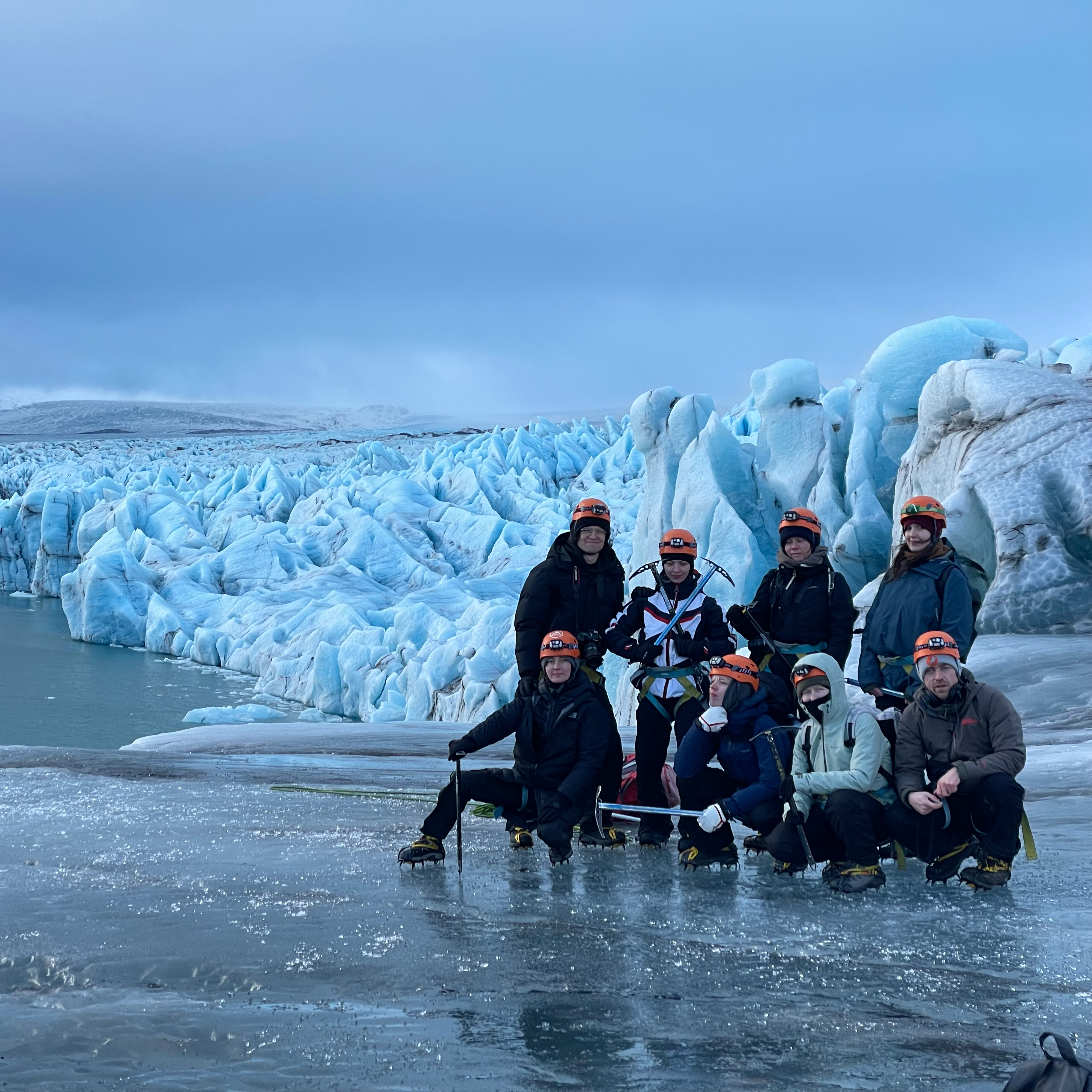
SÍM Residency got funding to invite seven artists from the
Nordic-Baltic region to a residency with focus on climate
change and glacial ecosystems.
Photo: SÌM Residency's collective archives
Nordic-Baltic region to a residency with focus on climate
change and glacial ecosystems.
Photo: SÌM Residency's collective archives
Examples of granted funding
“The committee was looking for a certain spark – something that goes beyond a solid concept. We were interested in how the applicants bring their vision to life, not only in how they support artists, but in how they engage with the world around them,” says Mari-Liis Rebane, chair of the decision-making expert committee.
“A good residency to illustrate that was Verpėjos – an artist-run residency space in a Lithuanian rural area that supports sustainable art by combining traditional crafts and contemporary practices while promoting low-impact living and local materials,” she continues.
As in previous rounds, the experts also aimed for a representative distribution across different art fields and geographical areas.
“We valued those who actively present work to the public and create meaningful opportunities for dialogue, exchange, and visibility,” says Mari-Liis Rebane.
As an example of meaningful international collaboration, she highlights the Nordic-Baltic Sound Residency Network (with the lead partner Lithuanian Composers Union, Lithuania, and partners from Notam in Norway, Sound Art Lab in Denmark, and Inkonst in Sweden), which offers a cross-residency program for sound artists in the Nordic-Baltic region.
“BEK – Bergen Centre for Electronic Arts (Norway) distinguished themselves with a strong focus on experimental projects that explore the relationship between art and technology. Artists get access to high-end studios, workshops, and public presentation opportunities, while being part of a supportive creative community,” she continues.
According to Mari-Liis Rebane, the selected residencies stood out for offering more than just space — they provide a context: a thoughtful, inspiring environment where artists can experiment, grow, and connect.
Results and effects of Funding for artist residencies
The residencies are actively collaborating with different local or regional organisations which create new forms of synergies.
In 2025 SÍM Residency realized a residency programme with a focus on climate change and Iceland’s glacial ecosystems for seven artists from the Nordic-Baltic region. They established a new collaboration with The University of Iceland’s Research Centre and New Research Centre, which both expressed a strong interest in continuing the partnership.
”The implemented activities generated several synergy effects across the residency’s areas of operation. Artistically, the interdisciplinary structure encouraged collaboration between artists, scientists, and environmental researchers, leading to shared methodologies and new hybrid forms of practice. “
” We received highly positive feedback, particularly regarding the importance of cross-disciplinary collaboration between artists, scientists, and environmentalists. Both research centers emphasized that artists play a valuable role in visualizing scientific findings and communicating complex environmental issues to broader audiences. They noted that such collaborations help bring scientific research into public awareness in compelling and accessible ways, strengthening engagement across different sectors of society”
Between 2023 and 2025 the Estonian Literary Society organised a residency programme aimed at writers from the UNESCO Cities of Literature in the Nordic and Baltic countries. Each participating residency artist was commissioned to write a letter addressed to the next one in turn, resulting in a multilingual booklet. The letters worked as a way for the residents to connect to each other. The collaboration was described in following way:
“Through the letters, the participation in the program, and the public events, the project connected writers from Iceland, Lithuania, and Estonia, enabling the exchange of knowledge of each other's culture. On the local level, the residencies provided the local audiences with the opportunity to get a better understanding of contemporary Icelandic and Lithuanian literature.”
Residency Circle in Malmö
In 2025, it was time to organize the Residency Circle again. The meeting is organized once per each three-year programme period of the programme.
The Residency Circle 2025 brought together 22 residency organisers from across the Nordic and Baltic regions to share experiences and contribute to the ongoing development of the artist residency field. Participants represented organisations that received residency funding from the Nordic-Baltic Mobility Programme for Culture in 2024–2025. The circle was organized in Malmö, Sweden together with expert group for the module and in collaboration with the local host Inkonst.
The meeting started with presentations of all the 22 Nordic and Baltic residency centres participating in the meeting. The programme also included guest speaker Luc Meier, the director of La Becque, a Swiss residency program focused artistic projects that explore themes linked to nature, the environment and technology, contemporary notions that are increasingly inescapable and inseparable. Meier gave a talk about how residencies can turn into long-term relationships by giving examples how La Becque often continued their collaboration with the artists after the residencies. The participants also had the opportunity to visit the local arts scene, through studio visits at Alma Söderberg and Lilith Performance Studio, and a meeting with Inkonst’s residency artist Ruby Nilsson.
The Residency Circle ended with a workshop where the participants discussed their current challenges, strategies and future of their residencies. The discussions brought up the lack of recognition of residency centres on national, regional and local level. The lack of annual funding and current funding cuts combined with rising costs are resulting in difficulties in sustaining sustainable working environments and hinders the development of new sustainable models for residencies.
Residency networks were identified as peer support, especially among smaller residencies with only a few staff members. Networks were also seen as important for gathering and sharing arguments for positive impacts of residency activities.
” It was wonderful to see the energy with which people came together to share their experiences, re-connect with colleagues and expand their network across the region. It’s rewarding to hear directly how the support from the Nordic Culture Point makes different ways of working possible”, the members of the expert group of Funding for artist residencies within the Nordic-Baltic Mobility Programme for Culture said afterwards.
” It was wonderful to see the energy with which people came together to share their experiences, re-connect with colleagues and expand their network across the region. It’s rewarding to hear directly how the support from the Nordic Culture Point makes different ways of working possible”, the members of the expert group of Funding for artist residencies within the Nordic-Baltic Mobility Programme for Culture said afterwards.
The participants’ feedback was positive; they felt inspired by each other’s work and the valued opportunity to share their experiences with their daily work. They got new contacts which could open for new collaborations, as well as received a better understanding of the residency field in the Nordic-Baltic region. The residencies appreciated especially the peer discussions and there was a clear wish to have more time for discussing with others next time.
Additional round of funding for artist residencies to support Ukrainian artists and cultural creators 2025
The Ministers for Nordic Co-operation (MR-SAM) decided in May 2025 to allocate additional funding for artist residencies to support Ukrainian artists and cultural creators. This allocation is continuation for previously decided initiatives in 2022 and 2024. The extra funds are administered as a part of the residency funding module of the Nordic-Baltic Mobility Programme. The expert group for Funding of artist residencies assessed the applications and made decision on the grants in November 2025.
In total, 40 residency centres applied for funding, amounting to €1 675 659 as applied amount. The entire available budget of €240 790 was allocated and six residency projects were granted funding. The main art fields were visual arts and dance as well as multidisciplinary including architecture, crafts, cultural heritage, design, literature and performing arts. The smallest awarded grant was €11 000 and the biggest grant €50 000 which is also is the maximum amount that can be awarded. 28 Ukrainian artists with their families will be given the opportunity to stay in residencies in Denmark, Estonia, Finland, Lithuania and Sweden between 2026 and 2027. Two of the granted projects are residency networks consisting of several partner in different locations. Two of the granted projects have received the additional funding before, while the other four were new receivers of this funding. Most of the granted applicants have received residency funding through the ordinary call.
In this round, the expert group prioritized residencies that demonstrate strong family-friendly structures and the capacity to host artists with families, recognizing the importance of inclusive environments that enable artists with caregiving responsibilities to participate fully.
“There is a shift toward a more professional and empathetic approach among residency centres. Many organizations show greater sensitivity to mental-health-aware practices, stronger social support networks, and deeper partnerships with local communities and institutions. This reflects both lessons learned from past experience and a growing collective commitment to long-term solidarity with artists at risk,” says Mari-Liis Rebane, chair of the expert group.
The expert group selected a diverse mix of fields, including interdisciplinary practices, dance, and architecture, ensuring a broad and dynamic range of creative work and a balanced geographical distribution between city centres, less populated areas, and rural regions.
“We also highlighted the importance of both experienced residency centres with a proven track record and emerging initiatives that demonstrate genuine commitment, creativity, and the motivation to provide supportive working conditions for Ukrainian artists,” Mari-Liis Rebane says.
The six residency programmes that received funding in 2025 were:
- Beast AIR, Denmark
- Milvus Artistic Research Centre, Sweden
- Estonian Society of Young Architecture NGO (VARES Valga Architecture Residency), Estonia
- Perpetuum Mobile ry (Artist at Risk), Finland
- HIAP ry, Ukraine Solidarity Residencies Programme, Finland
- Association Miško uostas, Community Forest Harbour, Lithuania
Results of the additional funding for artist residencies to support Ukrainian Artists in 2022-2025
Nordic Council of Ministers have provided the residency field with additional funding in 2022, 2024 and 2025 in order to support Ukrainian artists within the Nordic-Baltic region. The funding has been administrated through the existing Funding for artists residencies module and Nordic and Baltic residency organisations have been able to apply for the funding in order to invite Ukrainian artists to stay and work at their residencies.
Additional funding has been made possible by the Ministers of Nordic Co-operation (MR-SAM). The first decision was made in June 2022 and as the Nordic-Baltic Mobility Programme offers a well-functioning framework to administrate additional funds, there has been further allocations in 2024 and in 2025. The purpose of the initiative is to enable a safe and secure space for Ukrainian artists and cultural creators to explore their fields and to promote their professional networks in the Nordic and Baltic region and beyond. The funding will also help to facilitate dialogue between Ukrainians and those living in the Nordic and Baltic countries.
In total, between 2022 and 2025, 12 projects (6 projects/call) have been granted funding. All projects granted in 2022 and one the projects granted in 2024 have been finalized, and one project was cancelled. Four projects granted in 2024 and all six projects granted in 2025 are active and still in the progress of implementing their plans. Some projects granted in 2025 will continue until 2027.
The most common art fields of the reported grants are visual arts, second biggest literature and third film. A total of 86 Ukrainian artists with family members have been in residency based on the final reports received. Most of the residency artists have been women, but also some men and of unspecified gender. The length of residencies has been between 2 weeks and 12 months.
The residencies have increased the dialogue between Ukraine and the Nordic-Baltic region. For example Ventspils House describes the meetings between Latvian and Ukrainian translators and writers in following way:
“The residents had the opportunity to learn more about Latvian literature and to meet Latvian writers and translators of Ukrainian literature. We hosted two Ukrainian translators of Latvian literature, and they had the opportunity to meet many Latvian writers and discuss contemporary Latvian literature. However, there is now a greater interest in Ukrainian culture and political activities, and we believe that we have increased awareness and knowledge of contemporary Ukrainian literature in Latvian society.”
The Ukraine Solidarity Residencies Programme coordinated by HIAP Helsinki International Artist Programme in Finland is one of the residency projects that has received the additional funding each time since the start of the allocation of the additional funding. The programme is a collaboration between Finnish residency organisers and art organisations wanting to support and assists Ukrainian artists. Its primary aim is to promote artistic continuity, solidarity, and professional development, while fostering long-term networks within the Finnish and international arts communities. The programme offers along with residencies the artists also events such as exhibitions and artists talks, and workshops on grant writing, wellbeing, and the emotional impact of war.
The programme has been recognized in On the Move’s publication series The Situation of At-risk and Displaced Artists and Culture Professionals. A case study of the Ukraine Solidarity Programme was conducted in 2025 in Protecting and Supporting At-risk and Displaced Arts Professionals Across Borders (Volume 3: Case Studies). On the Move is an international information network dedicated to artistic and cultural mobility. Nordic Culture Point is a member of the network and has also contributed to the publication with information and experiences from the additional funding for Ukrainian artists.