Network funding
Tendencies in applications for Network funding
In 2025, a total of 184 applications were received for Network funding. Of these, 150 applications were for Short-term network funding while 34 were for Long-term network funding. The number of applications received has increased by 18% from the previous year. This increase was mainly within the short-term network applications. As in previous years, the Short-term network funding had two application rounds while the Long-term network funding had only one application round at the beginning of the year.
A total of 21 applications were granted Network funding, of which four were long-term networks and 17 short-term networks. The total amount granted was €695 260, of which €318 200 was issued to short-term networks and 377 060€ was issued to long-term networks.
As in previous years, the highest sum granted to an individual short-term network was 20 000€ which is the maximum amount that can be granted for a one-year collaboration. The lowest granted amount was 12 000€. The highest sum granted within the funding for long-term networks was 100 000€ which is the maximum amount that can be granted. The lowest sum granted was 80 000€.
6 of the 17 granted short-term networks were new applicants. One of the long-term networks granted was a new applicant.
Among all the granted short-term networks, Sweden was the most popular partner country with participation in 13 networks, followed by Norway and Estonia with participation in networks. Finland and Denmark were represented in 11 networks. Lithuania and Latvia were represented in 9 networks. Faroe Islands were represented in three networks, Greenland in two and Åland in one.
Of all 21 granted networks in 2025, 10 networks (47,62%) included at least one partner from one of the Nordic countries and one of the Baltic countries. 7 networks included only Nordic countries, and 4 networks included only Baltic countries.
Of all 21 granted networks in 2025, 10 networks (47,62%) included at least one partner from one of the Nordic countries and one of the Baltic countries. 7 networks included only Nordic countries, and 4 networks included only Baltic countries.
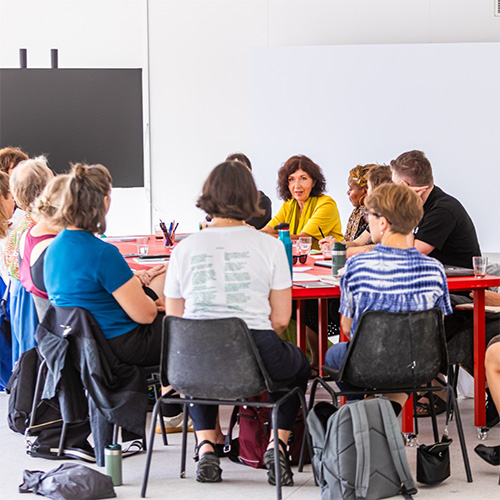
The Baltic-Nordic Artists and Art Workers Initiatives
aimed to understand the complex reasons for precarity
in the visual arts sector. Photo: Inga Juodyte
aimed to understand the complex reasons for precarity
in the visual arts sector. Photo: Inga Juodyte
In addition, 6 of all networks included partners from outside the Nordic-Baltic region. Other countries participating in the networks were Germany (3), Poland (2), Colombia, France, Belgium, the Netherlands, Great Britain, Portugal and Ukraine.
Nine (42,86%) of the granted applications involved multidisciplinary initiatives. The most common single art forms among the grant receivers were cultural heritage and music. Architecture, circus, crafts, film, theatre and visual arts were represented as the main field of art by one granted network each.
Increase in applications
The chair of the expert group, Katarina Lindholm, comments on the growing number of applications received in 2025:
“The expert group could grant funding to only a fraction of the worthy applications. The growing number of applications is clear evidence of the decrease in national and local funding for the art and culture field in general, and for cross-border co-operation in particular”.
According to Lindholm, these hard times are evidenced in the fact that more and more institutions and publicly funded organisations, including the artists themselves, are in great need of funding for development, collaboration, and exchange across borders, which is precisely what keeps the art and culture field alive and innovative.
“At the same time, the lack of long-term funding and base funding for established Nordic and Baltic networks and collaborative platforms is also visible among the applications for network funding, as established but effective networks must be weighed against new and promising initiatives. Our unique regional funding instruments have, perhaps, come to play a more decisive role in the vitality of the Nordic and Baltic art and cultural scene than ever before,” says Lindholm.
“In times of ever-increasing threats, it’s more important than ever to meet and move things forwards through dialogue. The Nordic-Baltic Mobility Programme’s Network funding for the cultural sector is a direct counterforce to polarisation in society,” says Katarina Lindholm.
Katarina Lindholm notes that several applications came from Baltic applicants seeking to strengthen contacts and co-operation within specific sectors, to enhance Baltic competitiveness and expertise within these networks. Examples of granted Baltic networks are Baltic Dance Network and Baltic Contemporary Opera Network.
Among all the granted short-term networks, Sweden was the most popular partner country with participation in 13 networks, followed by Norway and Estonia with participation in networks. Finland and Denmark were represented in 11 networks. Lithuania and Latvia were represented in 9 networks. Faroe Islands were represented in three networks, Greenland in two and Åland in one.
Of all 21 granted networks in 2025, 10 networks (47,62%) included at least one partner from one of the Nordic countries and one of the Baltic countries. 7 networks included only Nordic countries, and 4 networks included only Baltic countries.
In addition, 6 of all networks included partners from outside the Nordic-Baltic region. Other countries participating in the networks were Germany (3), Poland (2), Colombia, France, Belgium, the Netherlands, Great Britain, Portugal and Ukraine.
Nine (42,86%) of the granted applications involved multidisciplinary initiatives. The most common single art forms among the grant receivers were cultural heritage and music. Architecture, circus, crafts, film, theatre and visual arts were represented as the main field of art by one granted network each.
Examples of granted short-term networks
Cross-Border Network of Small Classical Music Festivals
Cross-Border Network of Small Classical Music Festivals brings together small classical music festivals in the Nordic and Baltic countries in order to strengthen co-operation, share experiences, and tackle common challenges together. The aim is to improve artistic quality, broaden audience demographics, and build a sustainable platform for long-term collaboration to give people in sparsely populated regions access to high-quality classical music.
Cross-Border Network of Small Classical Music Festivals brings together small classical music festivals in the Nordic and Baltic countries in order to strengthen co-operation, share experiences, and tackle common challenges together. The aim is to improve artistic quality, broaden audience demographics, and build a sustainable platform for long-term collaboration to give people in sparsely populated regions access to high-quality classical music.
Nordic Network for Transnational Craft Perspectives (Norwegian Crafts)
The Nordic Network for Transnational Craft Perspectives is a new network with a special focus on Romani handicraft in the Nordic region. Through a series of joint meetings and/or workshops in Norway, Sweden and Finland, the main objective of the network is to exchange knowledge and ideas, build and strengthen networks and collaborations and to strengthen the position of Romani handicrafts.
The Nordic Network for Transnational Craft Perspectives is a new network with a special focus on Romani handicraft in the Nordic region. Through a series of joint meetings and/or workshops in Norway, Sweden and Finland, the main objective of the network is to exchange knowledge and ideas, build and strengthen networks and collaborations and to strengthen the position of Romani handicrafts.
Interlingual Network of Deaf and Hearing Performers (VšĮ Liūdni slibinai)
Interlingual Network of Deaf and Hearing Performers unites hearing-impaired Nordic and Baltic artists and non-hearing-impaired collaborators in order to build a sustainable, hearing-impaired-led platform for interlingual theatre. Under the guidance of prominent experts, the network will develop a strategy to unite similar initiatives under one umbrella, with meetings held to create tools, test rehearsal models, and design long-term formats based on alliances and creative power.
Interlingual Network of Deaf and Hearing Performers unites hearing-impaired Nordic and Baltic artists and non-hearing-impaired collaborators in order to build a sustainable, hearing-impaired-led platform for interlingual theatre. Under the guidance of prominent experts, the network will develop a strategy to unite similar initiatives under one umbrella, with meetings held to create tools, test rehearsal models, and design long-term formats based on alliances and creative power.
Nordic-Baltic Queer Archival Network (Asociacija "Isgirsti")
Nordic-Baltic Queer Archival Network brings together various stakeholders working with queer archives, cultural heritage, and art in the Baltic Sea Region and the other Nordic countries. Its primary aim is to promote an inclusive queer historiography by encouraging the exchange of knowledge, mutual learning, and joint initiatives. Through events and meetings, the network highlights marginalised identities, challenges heteronormative narratives, and improves access to queer archive material, which contributes to a more sustainable and inclusive society.
Nordic-Baltic Queer Archival Network brings together various stakeholders working with queer archives, cultural heritage, and art in the Baltic Sea Region and the other Nordic countries. Its primary aim is to promote an inclusive queer historiography by encouraging the exchange of knowledge, mutual learning, and joint initiatives. Through events and meetings, the network highlights marginalised identities, challenges heteronormative narratives, and improves access to queer archive material, which contributes to a more sustainable and inclusive society.
Examples of granted long-term networks
Baltic Dance Network: Navigating Identity in the Face of Changes (Lithuanian Dance Information Centre)
In the face of the war and unstable political situation, Baltic Dance Network (Network) aims to create a safe space for Baltic contemporary dance artists to connect and analyse their shared past, explore Baltic dance identity, as well as understand each Baltic country's context and uniqueness. We aim to recognize and express historical legacies, enhancing confidence in the international dance field, and empowering artists to reflect current political or other challenges through their art.
In the face of the war and unstable political situation, Baltic Dance Network (Network) aims to create a safe space for Baltic contemporary dance artists to connect and analyse their shared past, explore Baltic dance identity, as well as understand each Baltic country's context and uniqueness. We aim to recognize and express historical legacies, enhancing confidence in the international dance field, and empowering artists to reflect current political or other challenges through their art.
Baltic Contemporary Opera Network (Operomanija)
The Baltic Contemporary Opera Network is a joint initiative led by partners from Lithuania, Latvia & Estonia. Its overarching goal is to facilitate cultural exchange, the sharing of best practices, and the development of collaborative ventures within the realm of contemporary opera. This genre is an outstanding cultural phenomenon that represents the Baltics on the international stage. The network's focus lies in fostering cooperation among independent creators and producers within the region.
The Baltic Contemporary Opera Network is a joint initiative led by partners from Lithuania, Latvia & Estonia. Its overarching goal is to facilitate cultural exchange, the sharing of best practices, and the development of collaborative ventures within the realm of contemporary opera. This genre is an outstanding cultural phenomenon that represents the Baltics on the international stage. The network's focus lies in fostering cooperation among independent creators and producers within the region.
Nordic-Baltic experimental music platform NERDS (North Europe Resonance and Dissonance Society) (Association Skanu Mezs)
NERDS unites some of the key experimental and innovative music organizers in Nordic and Baltic countries to foster collaboration, knowledge exchange, and project development while amplifying the Nordic-Baltic new music realm. This vibrant field embodies core democratic values—free expression and critical inquiry—now under global threat. Through our work, we aim to engage and challenge audiences, promote cultural exchange, stimulate "cultural tourism," and a Nordic-Baltic creative space.
NERDS unites some of the key experimental and innovative music organizers in Nordic and Baltic countries to foster collaboration, knowledge exchange, and project development while amplifying the Nordic-Baltic new music realm. This vibrant field embodies core democratic values—free expression and critical inquiry—now under global threat. Through our work, we aim to engage and challenge audiences, promote cultural exchange, stimulate "cultural tourism," and a Nordic-Baltic creative space.
Museum Why (Malmö konstmuseum)
Museum Why is a creative learning network rooted in Nordic and Baltic traditions, exploring the possibilities of the future art institution through collective artistic experiments and knowledge exchange that foster new collaborations and networks. United by a shared commitment to rethinking institutional change through the lenses of ecology, social sustainability, and radical locality, our network continues to find innovative ways of reshaping the art institution of tomorrow.
Museum Why is a creative learning network rooted in Nordic and Baltic traditions, exploring the possibilities of the future art institution through collective artistic experiments and knowledge exchange that foster new collaborations and networks. United by a shared commitment to rethinking institutional change through the lenses of ecology, social sustainability, and radical locality, our network continues to find innovative ways of reshaping the art institution of tomorrow.
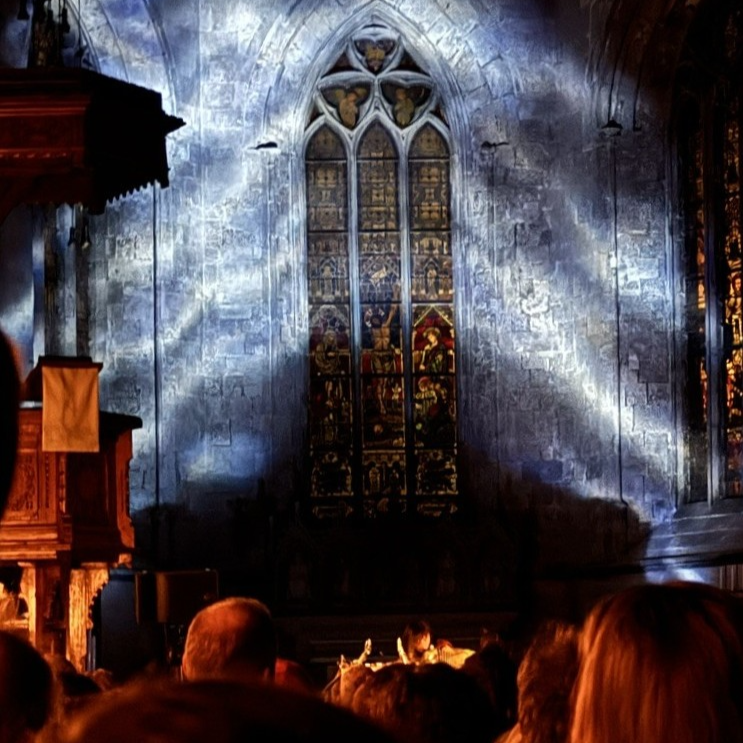
NERDS is a Nordic-Baltic platform for
experimental music. Photo: Viestarts Gailītis
experimental music. Photo: Viestarts Gailītis
Results and effects of Network Funding
New collaborations
The networks should create new contacts within its field of work and have contact with other networks. New collaborations were started within the short-term network Nordic Baltic Residency Forum where a new residency network organisation LaMeRe in Latvia was founded as a result of the last meeting. The network Nordic Baltic Residency Forum, coordinated by LOORE, aimed to achieve a dual goal: to assist Estonian, Finnish, and Swedish networks of creative residencies in developing sustainable organizational work models, and to establish a collaboration platform for organizers of artist-in-residence programs in these countries, promoting the sharing of best practices, facilitating exchanges, and stimulating collaborations within the Nordic-Baltic region. The long-term goal of the network was to create a broader network of residencies across the Nordic-Baltic countries.
The Nordic Baltic Residency Forum describes the results:
“A key result was the formation of the Latvian residency network in January 2025, with LOORE’s advisory role and the Baltic Nordic Residency Forum experience being crucial. This collective effort facilitated the creation of a long-term cooperation network, now involving both old (SWAN, FAIRE) and new (LaMaRe) partners.”
Another good example of strengthened collaboration is the Nordic Textile Art network that reports synergies being created within the network:
”The collaboration partners contributed to a result in reassuring group synergy and advanced textile dialogue that were identified in collaborative spirits of the network intentions. It strengthened the relations through textile culture as activator, and peaceful bonds were created, when equality and humanitarian values were addressed.”
The aim of the Nordic Textile Art network was to deepen contacts and collaboration between artists and organizations for textile arts in each Nordic country and to create a mobility with new forums for textile arts where the Baltic countries are included in their textile network.
The short-term network Baltic-Nordic Art Workers Initiatives shares their most important experiences of collaboration in following way:
”..sharing experiences and learning from each other how to best approach the struggles faced by artists and art workers in both Baltic and Nordic countries: lacking structrual financial support for arts, issues with artists and art workers receiving fair pay for their creative work, and lack (until now) of collaboration between long-standing traditional artists associations and younger grassroots initiatives in the arts.”
”..sharing experiences and learning from each other how to best approach the struggles faced by artists and art workers in both Baltic and Nordic countries: lacking structrual financial support for arts, issues with artists and art workers receiving fair pay for their creative work, and lack (until now) of collaboration between long-standing traditional artists associations and younger grassroots initiatives in the arts.”
The Baltic-Nordic Artists and Art Workers Initiatives aimed to establish a working dialogue between initiatives that address the precarity of material, social, and political conditions of artists and art workers in Baltic and Nordic countries. The network aimed to understand the complex reasons for precarity in the visual arts sector and to address this problem on shared practical grounds.
The long-term network ARTiculate Pedagogy Network (APN) is a circus pedagogy network with an ambition to extend the pedagogy and education collaborators within the region and include different collaborators from the circus education sector. They describe how the network and especially the job shadowing has been a valuable experience for the different members of the network:
”The network has been a valuable space for sharing experiences and strengthening knowledge in circus pedagogy. Job shadowing was a major highlight, providing teachers with hands-on learning and an informal network of colleagues across the Nordic-Baltic region. Teatronas found it especially effective in involving individual teachers, even inviting a Latvian instructor back due to their success at a summer camp. Cirkus Syd saw job shadowing boost participants’ self-confidence, with one calling it a “once-in-a-decade opportunity.”
A network that has actively worked on reaching gender equality goals is Hot Type Network which has worked on making a historically male-dominated field more accessible for women. The Hot Type Network aimed to preserve Linotype machines and the intangible heritage of linecasting. The short-term network describes their work in following way:
” Workshop announcements explicitly encouraged participation from all genders, backgrounds, and experience levels, fostering a welcoming and supportive environment. As a result, many female practitioners joined the workshops, gaining hands-on experience and mentoring opportunities that would otherwise have been difficult to access. Women have also contributed to the development of the network itself, including in leadership roles, workshop design, and content creation. During technical training sessions, special attention was given to creating an inclusive atmosphere where questions and collaboration were encouraged, ensuring that participants of all backgrounds felt empowered to contribute and experiment. This approach not only promotes gender diversity but strengthens the overall resilience and creativity of the network.”