Mobility funding
Tendencies in applications for Mobility funding
The number of applications for the Mobility funding module has been on stable level for the past 2-3 years with only small variation in the number of incoming applications. It can be expected that the number of applications for Mobility funding will be at this same level also in the future. At the same time, the expert group feels that the funds available for the module are not sufficient, the grant percentage is around 15 % annually and, on each round, many high-ranking applications are left without funding due to limited budget.
Of the total 250 grant receivers in 2025, 154 granted applicants (62 %) completed their travel in 2025. Of the 154 final reports that have been received from this year’s three rounds 110 grant receivers (71 %) state the travel been undertaken as described in the application. Of the same 154 final reports 84 % state that they have plans for possible future collaborations as a result of the Mobility funding grant. 83 % state that travel has contributed to development and innovation within their area of activity. Grant receivers report returning home from their travel with new artistic ideas for their careers, deeper understanding of the destination country’s art scene as well as expanded knowledge and new insights. Many artists emphasis the importance of professional development through collaborations with professionals from other countries as well as developing their own artistic practice through inspiration from other Nordic and Baltic countries.
According to the final reports the granted travel has resulted in collaborations with new partners at Nordic level (27 %), at Baltic level (6 %), at Nordic-Baltic level (19 %), at international level (24 %) but also at national (1 %) and at local (8 %) level.
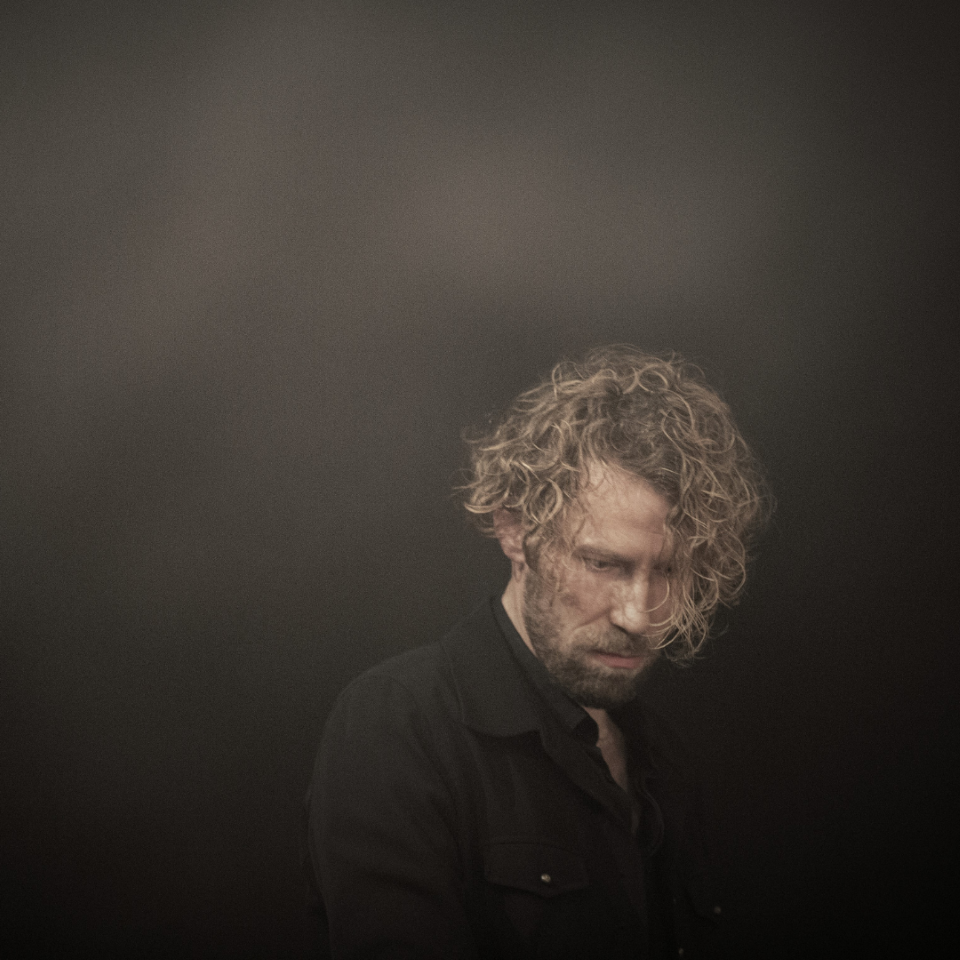
Christian Skjødt Hasselstrøm travelled from
Denmark to Norway for participation in the biennal
Momentum 13. Photo: Anna Drvnik
Denmark to Norway for participation in the biennal
Momentum 13. Photo: Anna Drvnik
Reflections from the Expert group:
The chair of the expert group, Janne Krogh Hansen, says that the group places great emphasis on ensuring good geographical balance across the Nordic and Baltic regions when making decisions about funding. The expert group is also keen on distributing the funds to a wide variety of artistic disciplines as well as different backgrounds and voices, reflecting the diversity of arts and culture in the region.
Janne Krogh Hansen points out that Mobility funding plays a very important role in promoting artistic development. It facilitates short, flexible trips and stays that open doors to new networks and methods as well as the exchange of knowledge.
“The grants do more than just fund individual activities – they help to create long-term connections, new partnerships, and the cross-border exchange of perspectives. By reducing practical and financial barriers, the programme gives more artists and cultural practitioners access to opportunities they might otherwise never have had. At the same time, mobility contributes to increased understanding and co-operation within the region, which feels particularly valuable at a time when cultural dialogue and cross-border co-operation are strained in many areas,” Janne Krogh Hansen says.
Example of results from granted Mobility funding
Mobility funding is often applied for by visual artists who have been invited to exhibit their work in another Nordic or Baltic country. One example from 2025 is the Norwegian biennal “Momentum 13” which offered the artists an opportunity to exchange ideas with other participating artists and meet with curators from Nordic countries as well as other countries. The exhibition took place at Galleri F15 in Moss, Norway, and there were several applicants applying for Mobility grant to cover their travel costs. Here are two examples of granted travel from Denmark to Norway:
Christian Skjødt Hasselstrøm
Christian Skjødt Hasselstrøm participated with a piece called "µ". The artwork uses advanced experimental particle detector technology to extend and explore human sensory and cognitive capacities, conducting a sensory exploration of a ubiquitous cosmic phenomenon. Cosmic rays, high-energy particles originating from space, constantly bombard the Earth. Although the atmosphere blocks most of them, the few that make it through create showers of secondary particles (among them muons) that reach the planet’s surface. This shower produces an invisible flow that continuously surrounds and bathes us and our environment. The artwork "μ" can be seen as a live cosmic listening station, inviting to enter a grid that hints at hidden worlds far beyond the boundaries of the world we inhabit.
Mogens Jacobsen
Mogens Jacobsen produced an interactive sonic sculpture that produced sound to life through therapeutic singing bowls, robotic mallets, and an equipment case with network-sniffing electronics. It transforms the nearby electronic microenvironment into a generative meditative sonic composition, responding to the unique constellations of visitors' phones. By scanning the unique identity of nearby smartphones, the central electronics convert this hidden network of mobile devices into an immersive sonic and kinetic experience. The sculpture was performed collectively by the hidden phones as a whole rather than being individually played by each visitor.